

POS integration partners are defined as specialist providers who connect point-of-sale systems to other business applications, including accounting software, inventory management, CRM platforms, and e-commerce channels. The role of POS integration partners goes far beyond a one-time technical setup. These partners shape how data flows across your entire operation, directly affecting speed, accuracy, and profitability. For retail and hospitality businesses, disconnected legacy systems silently drain revenue through duplicated effort and data errors. The right partner eliminates that drain and builds a foundation for growth.
How POS integration partners benefit retail and hospitality operations
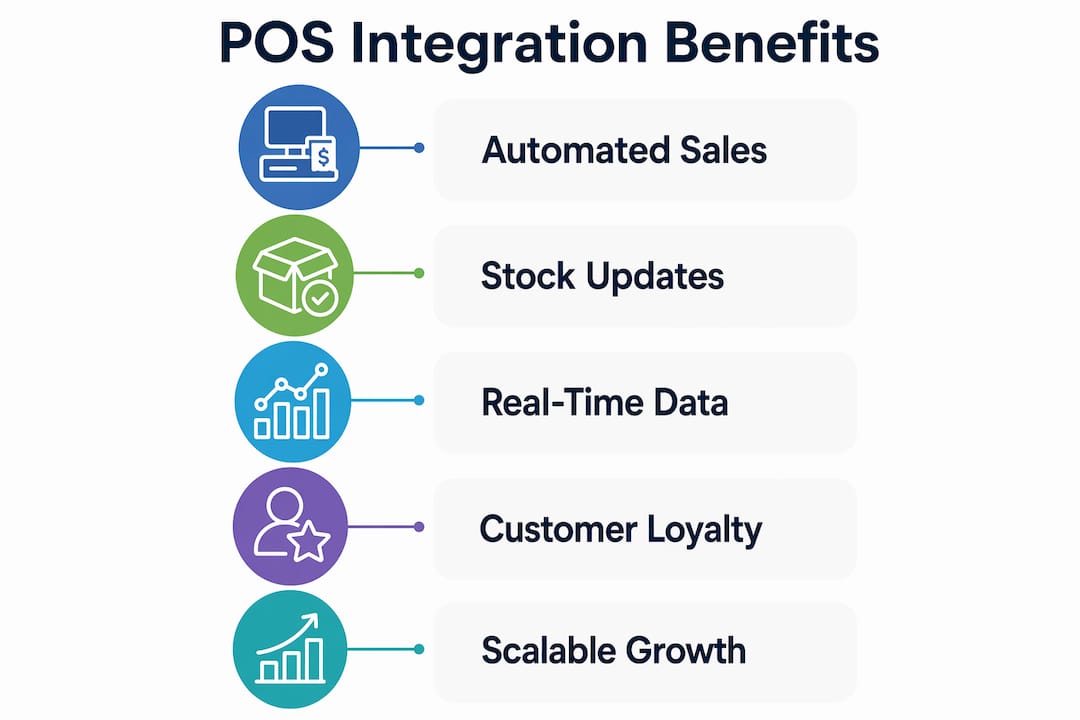
The most direct POS integration benefit is the removal of manual data entry. When your POS talks to your stock management system in real time, staff stop re-keying sales figures into spreadsheets. That alone saves a typical retail or hospitality operation approximately 12 hours of manual labour per week, which translates to meaningful annual savings at fully loaded labour costs. That time is better spent on customer service, not data reconciliation.
The financial case is equally clear. Businesses using real-time integrated systems achieve 97% higher profit margins and 62% higher revenue growth than those relying on manual or batch data flows. That gap exists because integrated data enables faster, better decisions. A hospitality operator who can see which dishes are selling at 7PM on a Friday can adjust staffing and stock before the rush, not after it.
Key operational benefits include:
- Automated stock updates across all sales channels, reducing overselling and write-offs
- Accurate end-of-day reporting without manual consolidation across terminals
- Real-time visibility into cash flow, which supports faster supplier negotiations
- Faster reconciliation between POS, card terminals, and accounting software
- Reduced human error in pricing, discounts, and VAT calculations
Pro Tip: Ask any prospective integration partner to demonstrate a live data sync between a POS terminal and an accounting platform such as Sage or Xero. If they cannot show it working in under 60 seconds, the integration is not production-ready.
The importance of POS partnerships also shows up in customer experience. When loyalty programmes, online ordering, and in-store POS share a single data source, customers receive consistent pricing and rewards regardless of how they shop. That consistency builds trust and repeat business.

What criteria define an effective POS integration partner?
Choosing POS integration partners correctly is the decision that determines whether your technology investment pays off or becomes a source of ongoing frustration. The criteria below separate capable partners from those who will cost you more in the long run.
-
Documented API expertise. A credible partner holds clear, current documentation for every API they work with. A critical red flag is vendors offering indefinite paid support for custom integrations, which signals poor API documentation and a technical debt trap waiting to happen.
-
Realistic project timelines. Partners who promise full integration in days without a detailed scoping exercise are not being honest. Expect a proper discovery phase, a written project plan, and defined milestones.
-
Transparent support agreements. Service level agreements should specify response times, escalation paths, and what happens when a vendor updates their API and breaks your integration. Vague support terms are a commercial risk.
-
Client retention and references. Ask for references from businesses of a similar size and sector. A partner with strong client retention has earned it through consistent delivery, not just a good sales pitch.
-
Change management capability. Technical skill alone is not enough. The partner must help your team adopt new workflows, train staff, and manage the transition without disrupting trading.
Pro Tip: Request a copy of the partner’s standard ownership matrix before signing any contract. This document should name who is responsible for each system, each data feed, and each escalation path. If they do not have one, walk away.
The value of POS partners also lies in their commercial transparency. Hidden fees for minor updates, charges for documentation, or vague licensing terms all signal a partner who prioritises their margin over your operational success.
What are the risks in POS integration partnerships?
POS integration is an ongoing operational dependency, not a one-time project. That distinction matters enormously. When a software vendor updates their API, integrations can break overnight. Without a defined support governance structure, your business carries that risk alone.
The most common risks in POS system collaboration include:
- Vendor lock-in from all-in-one platforms that make switching prohibitively expensive
- Integration breakage caused by unannounced API changes from third-party vendors
- Scope creep in integration projects that inflates costs beyond the original budget
- Inadequate rollback plans that leave businesses stranded if a deployment fails
- Hidden support costs that accumulate when partners charge for every minor fix
All-in-one integrated platforms simplify management but increase switching costs and the risk of vendor lock-in. Operators who favour systems supporting multiple payment integrations retain negotiating leverage and avoid disruption when a single provider changes terms.
The mitigation is straightforward. Insist on documented ownership matrices, cutover plans, and rollback procedures before any deployment begins. These documents define who owns each component, what happens if something fails, and how the business returns to normal trading if the integration needs to be reversed.
“The quality of rollout-ready materials, including ownership matrices, cutover and rollback plans, and hypercare SLAs, defines the success of POS integration deployments. Clear escalation paths and proactive monitoring ensure smooth operations post-integration.”
Open API ecosystems and hybrid integration approaches offer the best protection against lock-in. They allow businesses to swap out individual components without rebuilding the entire stack. Operators increasingly adopt this approach to retain flexibility and avoid dependency on any single provider.
How to use POS integration partners for growth and scalability
The benefits of integration partners extend well beyond fixing today’s operational problems. The right partner positions your business to add new capabilities without disrupting existing trading. POS reliability reduces downtime and enables retailers to expand their feature sets confidently, knowing the core system will not buckle under new load.
Practical steps for using integration partnerships to support growth:
- Align integrations to trading rhythms. Understanding transaction peaks, reconciliation bottlenecks, and payroll timing is vital. A partner who schedules a major update during your busiest trading week does not understand your business.
- Plan for advanced functionality. Modern POS integration partners enable features such as loyalty programmes, biometric verification, and omnichannel reporting as your business grows.
- Maintain an integration ecosystem map. Document every connected system, every API version in use, and every dependency. This map becomes critical when you add new integrations or change suppliers.
- Review partnerships annually. Technology changes fast. A partner who was the right fit two years ago may no longer support the APIs or platforms your business now depends on.
The table below outlines how integration maturity maps to business capability:
| Integration maturity level | Typical capabilities unlocked |
|---|---|
| Basic (POS to accounting) | Automated sales reporting, VAT reconciliation |
| Intermediate (POS, stock, CRM) | Real-time stock visibility, customer purchase history |
| Advanced (omnichannel, loyalty) | Unified customer profiles, cross-channel promotions |
| Full ecosystem (analytics, AI) | Predictive restocking, dynamic pricing, fraud detection |
For hospitality operators, POS integration for hospitality at the advanced level means a single customer profile that tracks in-venue, delivery, and online orders simultaneously. That data drives personalised offers and reduces the cost of acquiring repeat customers.
Key takeaways
POS integration partners are the operational backbone that connects your point-of-sale system to every other business tool you rely on, and choosing them correctly determines whether your technology investment pays off or becomes a liability.
| Point | Details |
|---|---|
| Automation drives savings | Integrated systems save approximately 12 hours of manual labour per week and support significantly higher profit margins. |
| Partner criteria matter | Prioritise documented API expertise, transparent SLAs, realistic timelines, and strong client retention records. |
| Risk requires governance | Insist on ownership matrices, cutover plans, and rollback procedures before any integration goes live. |
| Avoid vendor lock-in | Use open APIs and hybrid integration approaches to retain flexibility and negotiating leverage. |
| Scalability is the long game | The right partner enables loyalty programmes, omnichannel reporting, and advanced analytics as your business grows. |
Why most businesses get POS partnerships wrong from the start
The strongest payment and POS partnerships are grounded in deep operational understanding, not just technology alignment. That is the insight most businesses miss when they evaluate integration partners.
I have seen operators choose partners based on a polished demo and a competitive day rate, only to discover six months later that the partner had no real understanding of how a busy Friday night service or a bank holiday retail rush actually behaves. The technology worked in a test environment. It buckled under real trading conditions.
The hidden costs are where partnerships really fail. Charges for every API update, fees for documentation, and vague SLAs that offer no real recourse when something breaks. These costs accumulate quietly until the total cost of ownership far exceeds the original integration budget.
The POS ecosystem is also evolving faster than most operators realise. Performance has become the new competitive edge. Partners who cannot demonstrate consistent uptime, fast incident response, and a clear product roadmap are not equipped to support a growing business. Transparency and accountability are not optional extras. They are the baseline.
My advice is to treat the contract negotiation as seriously as the technical evaluation. Nail down escalation paths, API update responsibilities, and exit clauses before you sign. A partner who resists that level of scrutiny is telling you something important about how they operate.
— John
Ycr’s POS solutions built for integration-ready businesses
Ycr has supported UK retail and hospitality businesses for over three decades, supplying POS software and hardware designed to work within modern integration ecosystems. SAMTOUCH and EZEEPOS are built with the flexibility that integration-focused businesses need, supporting connections to accounting, stock management, and customer management platforms.
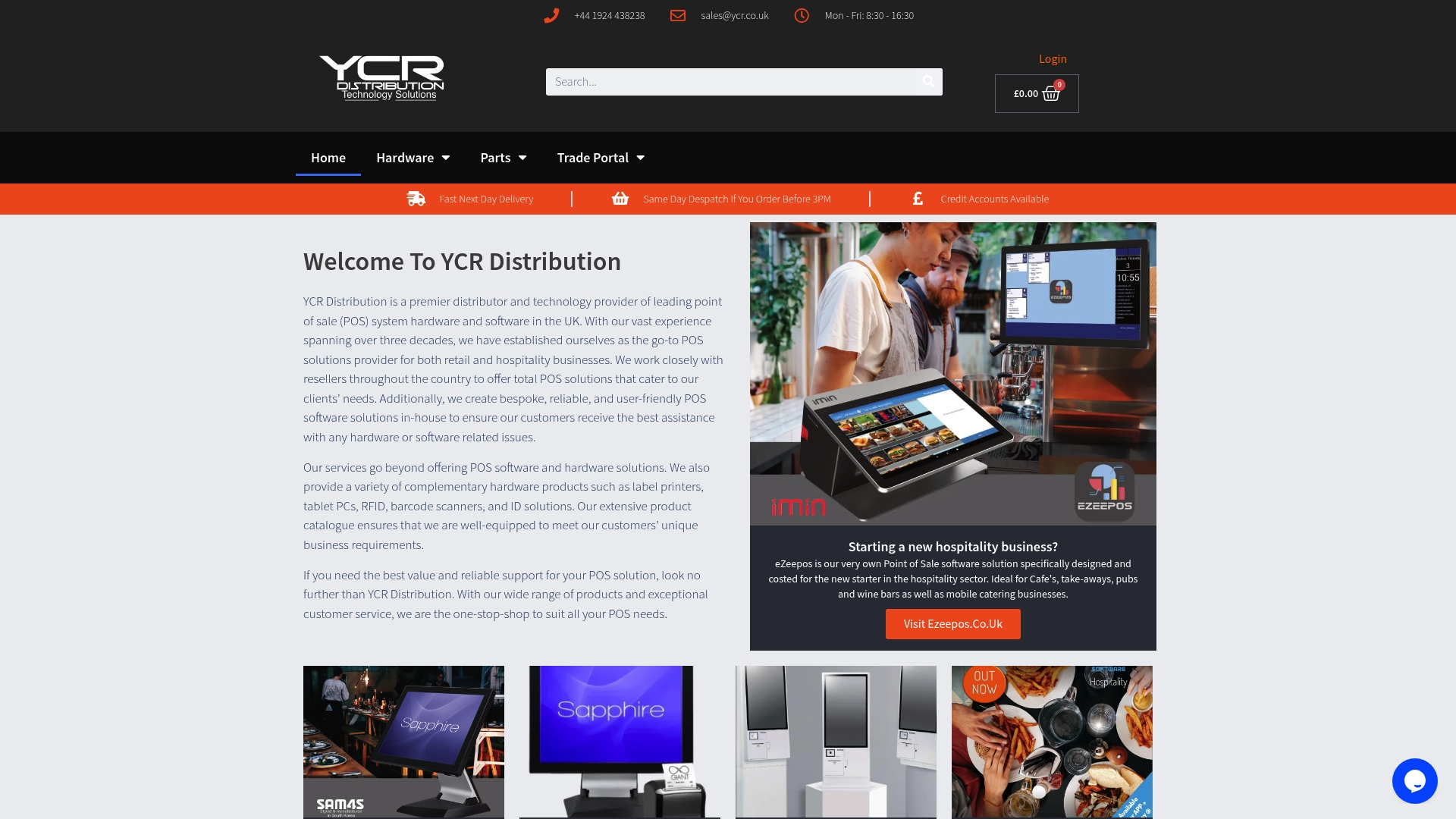
Ycr’s hardware range, including terminals from SAM4S and iMin, is selected for reliability and compatibility with the APIs and middleware platforms that integration partners depend on. Whether you are building your first integrated setup or expanding an existing ecosystem, Ycr provides the hardware and software foundation that makes integration partnerships work in practice. Browse the full POS software range to find the right starting point for your business.
FAQ
What is the role of POS integration partners?
POS integration partners connect point-of-sale systems to other business applications such as accounting, stock management, and CRM platforms. They manage the technical setup, ongoing support, and governance needed to keep those connections working reliably.
What are the main POS integration benefits for hospitality businesses?
Integrated POS systems automate stock updates, reduce manual data entry, and provide real-time sales visibility. Businesses using real-time integrated systems achieve significantly higher profit margins than those relying on manual data flows.
How do I avoid vendor lock-in when choosing POS integration partners?
Choose partners who support open APIs and hybrid integration approaches. This allows you to replace individual components without rebuilding your entire system, retaining flexibility and negotiating leverage with suppliers.
What documents should a POS integration partner provide before go-live?
A credible partner provides an ownership matrix, a cutover plan, a rollback procedure, and a hypercare SLA. These documents define responsibilities and recovery steps if anything goes wrong during or after deployment.
How often should I review my POS integration partnerships?
Review integration partnerships at least once a year. API versions change, new platforms emerge, and a partner who met your needs previously may no longer support the systems your business now depends on.